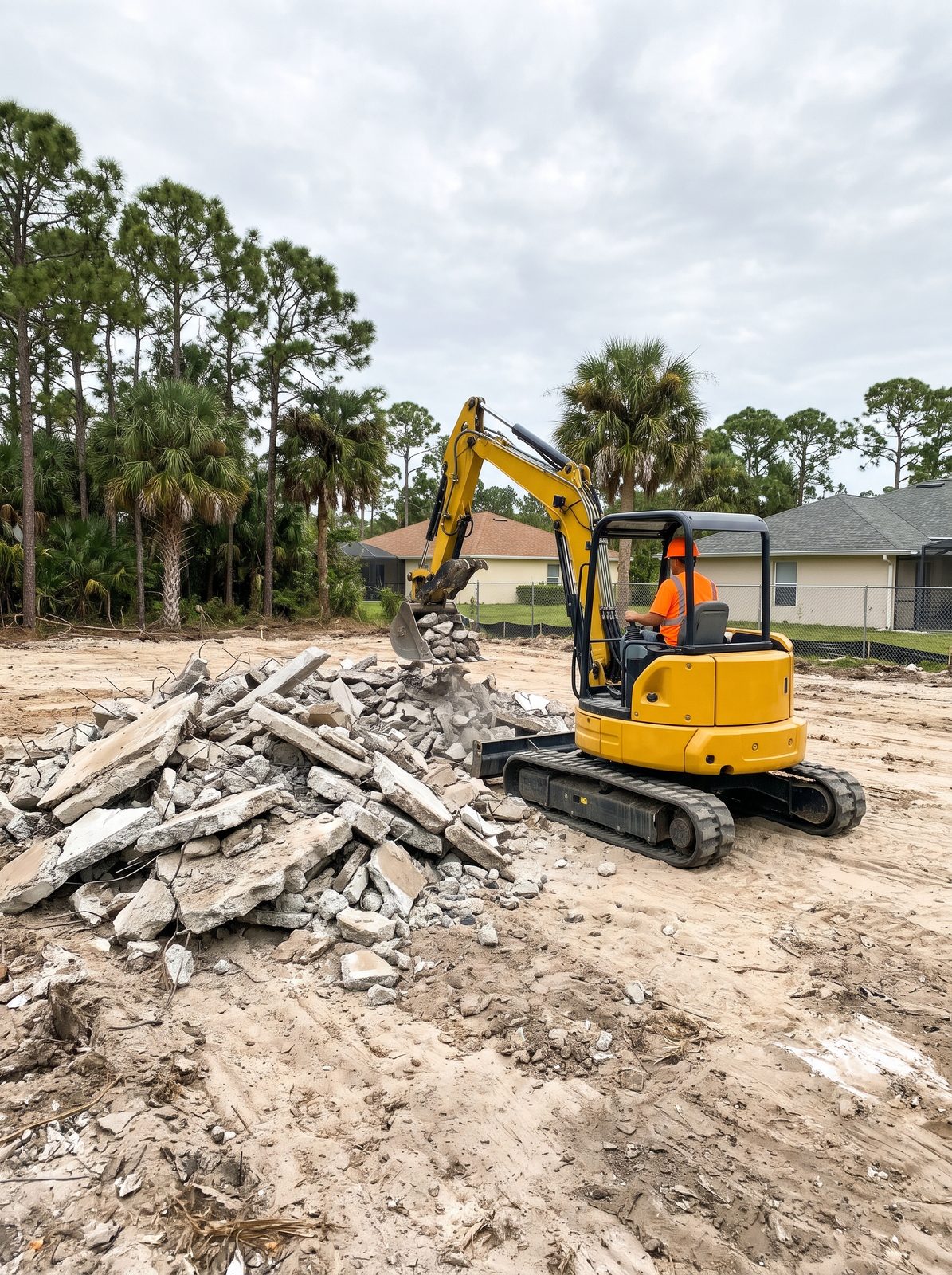
Excavation is the part of site work most owners never think about until a builder, engineer or inspector raises it. In Southwest Florida the ground can look level and sandy on top while hiding soft organic soil, old fill or a high water table a foot or two down. Catching that before the foundation goes in is far cheaper than fixing a settling slab later. Here are seven signs your property likely needs digging, and what each one usually means.
1. Water Sits on the Lot After a Storm
If puddles linger for a day or more after an afternoon thunderstorm, the lot either sits low, has a high water table, or has soil that does not drain. Ponding near where a house, driveway or septic drain field will go is a red flag. The fix often combines removing poor soil, reshaping the grade and adding drainage such as swales or a French drain so water has somewhere to go.
2. The Ground Feels Spongy or Smells Like Rot
Dark, peaty soil, often called muck, is common in low parts of Lee, Collier and Hendry counties, especially on land that used to be wetland or pasture. Organic soil compresses and decomposes over time, so it cannot stay under a structure. If a shovel turns up black, fibrous material or the ground gives underfoot, expect to excavate down to firm sand and replace the muck with clean, compactable fill.
3. Something Is Buried There
Older properties sometimes hide concrete chunks, old footers, abandoned septic tanks, buried yard debris or the remains of a demolished structure. Storm cleanups have also left material buried on some lots. Anything that rots, shifts or creates voids has to come out. If the property had a previous home, a demolition that left the slab or footings behind, or a filled-in pool, plan on digging to find out what is underneath.
4. You Are Adding Septic, Water or Sewer Lines
Many lots in Lehigh Acres, parts of Cape Coral and rural areas across the region rely on wells and septic systems. Septic tanks and drain fields have to be set at designed depths and elevations, and the drain field often needs suitable fill around it. Water, sewer, electrical conduit and stormwater pipe all require trenching too. Even a lot that looks build-ready needs excavation when utilities are on the plan.
5. Your Foundation Plan Calls for It
Your engineer's plans set the foundation type and what has to happen beneath it. A monolithic slab needs a compacted pad at the right height. Stem-wall foundations need footings dug and the space inside the walls backfilled and compacted. Some soil reports call for over-excavating unsuitable material and replacing it in compacted lifts. If the plans mention footing depths, compaction density or removal of unsuitable soil, excavation is part of the job.
6. The Lot Is Not at the Right Elevation
In unincorporated Lee County, new homes in a FEMA Special Flood Hazard Area must have the lowest floor at least one foot above the base flood elevation, and in X zones the county wants the living floor at least a foot above the crown of the road. Getting there can mean cutting high spots, bringing in fill or both. Cape Coral is a special case: since August 1, 2025 the city has limited base fill under single-family and duplex foundations in the flood zone to 12 inches, and fill on the rest of the lot to 30 inches or a 4:1 slope, so builds that need more height use stem walls or deepened slabs instead. Either way, someone has to move dirt to hit the numbers on the plan.
7. You Want a Pond, Pool, Retaining Area or Large Patio
Retention areas, decorative ponds, pool shells and deep paver bases all start with a hole. So does correcting a yard that slopes toward the house. If the project changes the shape of the ground, it involves excavation, and the spoil has to be either reused on site or hauled away.
Excavation vs. Grading: What Is the Difference?
Excavation is digging, cutting and removing earth to reach a depth, remove bad material or make room for something. Grading is shaping the finished surface so it is level where it should be and slopes where water needs to run. Most building projects need both, usually in this order: clearing, excavation, fill and compaction, then final grading.
What Affects the Cost and Time of Excavation
- Volume: how many cubic yards come out and how many go back in.
- Soil type: sand digs easily; muck must be removed and replaced; rock or old concrete slows the work.
- Water table: a high water table may require working in the drier months or managing water in the hole.
- Hauling: unsuitable soil and debris must leave the site, and clean fill must come in. Distance to the pit and disposal site matters.
- Access: tight lots and nearby utilities require smaller equipment and more care.
Fill is often a big part of the bill. Our fill dirt vs. topsoil guide explains which material goes where, and material hauling and delivery covers getting it to your site.
Before You Dig
- Call Sunshine 811 so underground utilities are located.
- Have your survey and site plan on hand so finished elevations are clear.
- Ask your builder whether a soil report or compaction testing is required.
- Check for protected wildlife burrows before equipment arrives.
Not sure which of these applies to you? See our excavation service or the step-by-step guide on preparing a lot for building.
Frequently Asked Questions
Can I tell if my lot needs excavation without a site visit?
Sometimes you can spot clues like ponding water or dark, spongy soil, but soil conditions below the surface are hard to judge from the top. A site visit, and on many builds a soil report, is the reliable way to know.
Does excavation come before or after land clearing?
After. Clearing removes vegetation, stumps and roots first so excavation equipment can reach the ground and see what it is working with.
What happens to the dirt that is dug out?
Good sand can often be reused on the same site for grading. Muck, roots, old concrete and other unsuitable material are hauled away for disposal or recycling.
Do I need to call 811 before excavating?
Yes. Florida's one-call center, Sunshine 811, arranges for underground utilities to be marked before digging. Contact it at least two full business days before breaking ground. It protects you, the crew and your neighbors' service lines.
Wondering whether your lot needs digging before you build? Call or text 914-562-4457 or request a quote. We serve job sites within about 60 miles of Fort Myers, and every job is quoted after we see the site.