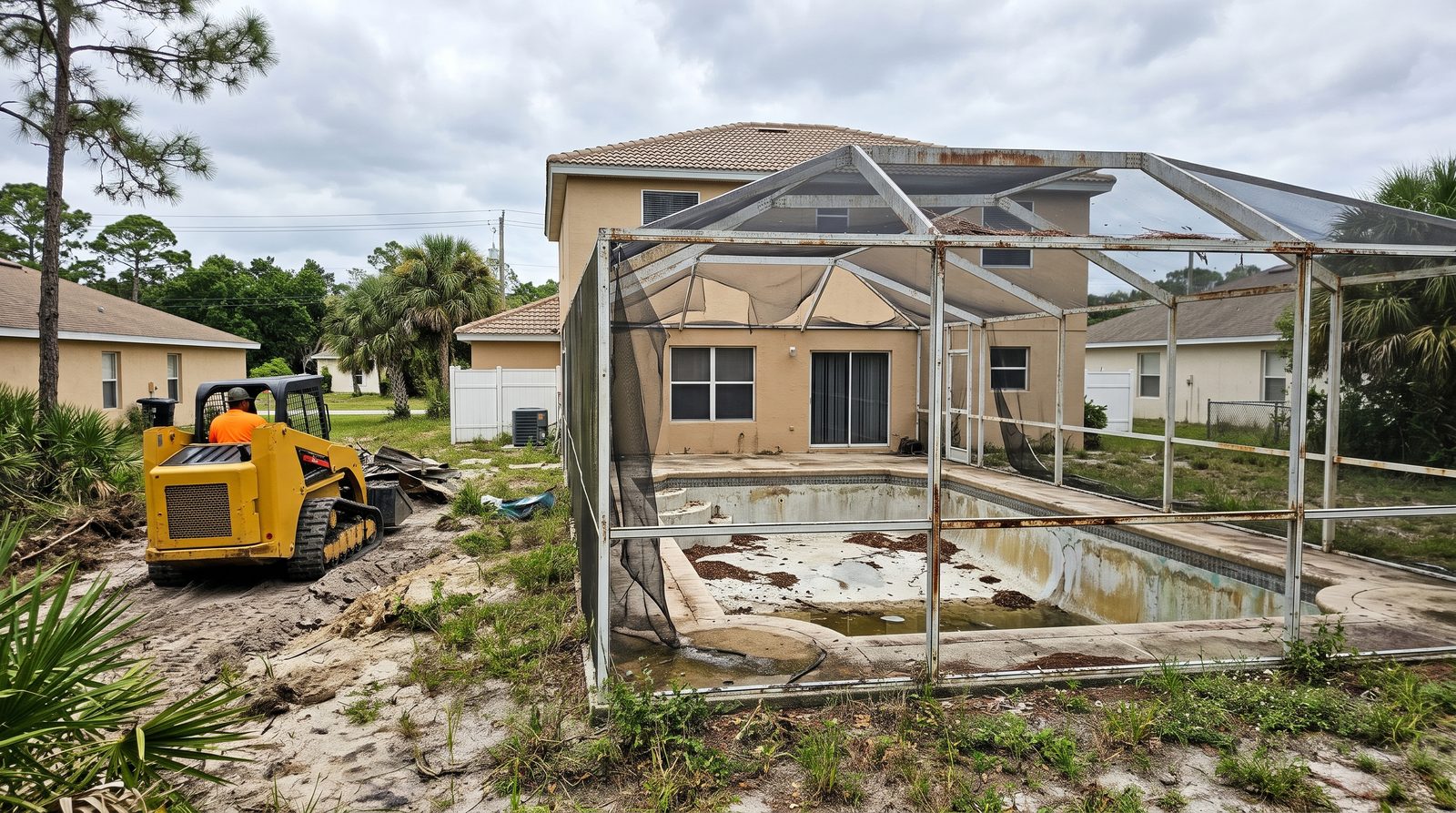
Plenty of Southwest Florida pools outlive their usefulness. The kids grew up, the shell cracked, the screen cage came down in a storm, or the monthly bill for chemicals, electricity and repairs stopped making sense. If you are thinking about taking a pool out, the first decision is the method: remove the entire shell, or demolish the upper part and fill in what remains. The right answer depends on what you plan to do with that part of the yard, and how long you plan to own the house.
The Two Methods in Plain Terms
Partial removal (fill-in)
The upper few feet of the pool walls are knocked down, the floor is broken or fractured so water can drain through it instead of collecting like a bathtub, and the cavity is filled with the broken concrete plus clean fill, then compacted and topped with soil. Most of the original shell stays in the ground.
Full removal
Everything comes out: walls, floor, steel, tile, coping and the plumbing in the excavation. The empty excavation is then refilled with clean fill, placed and compacted layer by layer. When it is finished, there is no pool left underground.
Side-by-Side Comparison
- Cost: partial is usually lower, because less concrete is hauled away and less fill is brought in. Full removal adds labor, truckloads and disposal.
- Future building: once the whole shell is gone and the fill is compacted correctly, the spot is generally usable for an addition, slab or pavers, subject to your engineer and permit. A partial fill-in leaves buried concrete that can limit what goes on top.
- Selling the home: some buyers, inspectors and lenders ask questions about a buried pool. A full removal tends to be the simpler story at resale.
- Settling risk: both methods depend on good compaction. With a partial, poor drainage through the old floor can lead to soft spots.
- Time: partial jobs are often quicker on site; full removals take longer because of the extra breaking and hauling.
What Moves the Price
Every pool is different, which is why the honest answer to what pool removal costs is that it depends on the site. These are the main variables:
- Size and depth of the pool, which sets both the concrete to break and the fill needed.
- Construction: gunite or concrete shells take more work than vinyl-liner or fiberglass pools.
- Decking and extras: a large concrete or paver deck, a spa, a raised wall or a screen enclosure slab adds removal work.
- Access: a side yard wide enough for equipment and a dump truck makes a big difference. Tight lots and lanai-enclosed pools require smaller machines.
- Hauling and disposal: concrete must go to a disposal or recycling site, and disposal fees are typically charged by the ton.
- Fill and final grade: the amount of clean fill delivered, plus topsoil and sod or landscaping at the end.
For a broader look at what drives demolition budgets, read demolition cost in Southwest Florida.
How a Pool Removal Typically Goes
- Permit. Cities and counties in the region generally require a permit to demolish or abandon a pool. In Cape Coral, for example, the city's residential pool demolition guideline lists a site plan, a burrowing owl affidavit and, above a set job value, a Notice of Commencement. Rules differ by jurisdiction, so confirm with the building department for your address.
- Utilities. The pool's electrical circuit, and any gas line to a heater, are disconnected and made safe before demolition.
- Draining. The water is pumped out. Where the water can be discharged is a local question, so ask your city or county before draining.
- Demolition. An excavator with a breaker breaks out the shell, either the upper walls only or the entire structure.
- Inspection. Permits usually come with inspections. Cape Coral's guideline, for instance, includes a pool abandonment inspection to confirm the pool or its bottom has been removed or fractured.
- Hauling. Broken concrete and debris that will not stay on site are loaded and hauled out.
- Backfill. Clean fill goes in a layer at a time, and each layer is compacted to limit settling later.
- Finish grade. The surface is shaped so water drains away from the house, then finished with topsoil, sod, pavers or landscaping.
If you plan to put a slab with footings where the pool was, expect a separate permit for that work. Cape Coral's guideline states this directly.
How to Decide
- Choose full removal if you might add a room, garage, guest house or large patio there, or if you expect to sell in the next few years.
- A partial fill-in may be enough if you plan to stay, want lawn or garden in that spot, and want the lower-cost option.
- Ask your builder or engineer before deciding if any structure could ever go over the old pool area.
Our pool demolition service covers breaking out the shell, hauling, fill delivery and final grading. If the pool is coming out as part of a bigger project, see our demolition and grading and site prep pages, or the house demolition process guide.
Frequently Asked Questions
How long does it take to remove a residential pool?
The on-site work for many residential pools takes a few days, depending on size, access, inspection scheduling and weather. Full removals take longer than partial fill-ins. Permit time comes before that.
Is a permit required to take out a pool in Southwest Florida?
In most jurisdictions, yes. Cape Coral, for example, has a residential pool demolition guideline with its own application requirements and inspections. Check with your city or county building department for the rules at your address.
Can I build over a pool that was filled in?
When the entire shell comes out and the fill is compacted correctly, the spot can often support future construction, with your engineer's approval and the right permit. A partial fill-in leaves concrete in the ground and is more limited, so get your builder's or engineer's input first.
What happens to the screen enclosure and deck?
They can be removed as part of the same job. Taking out the deck and enclosure slab adds breaking and hauling, so include them when you request a quote.
Ready to take out a pool? Call or text 914-562-4457 or request a quote. We work in Fort Myers and surrounding communities, and every job is quoted after we see the site.