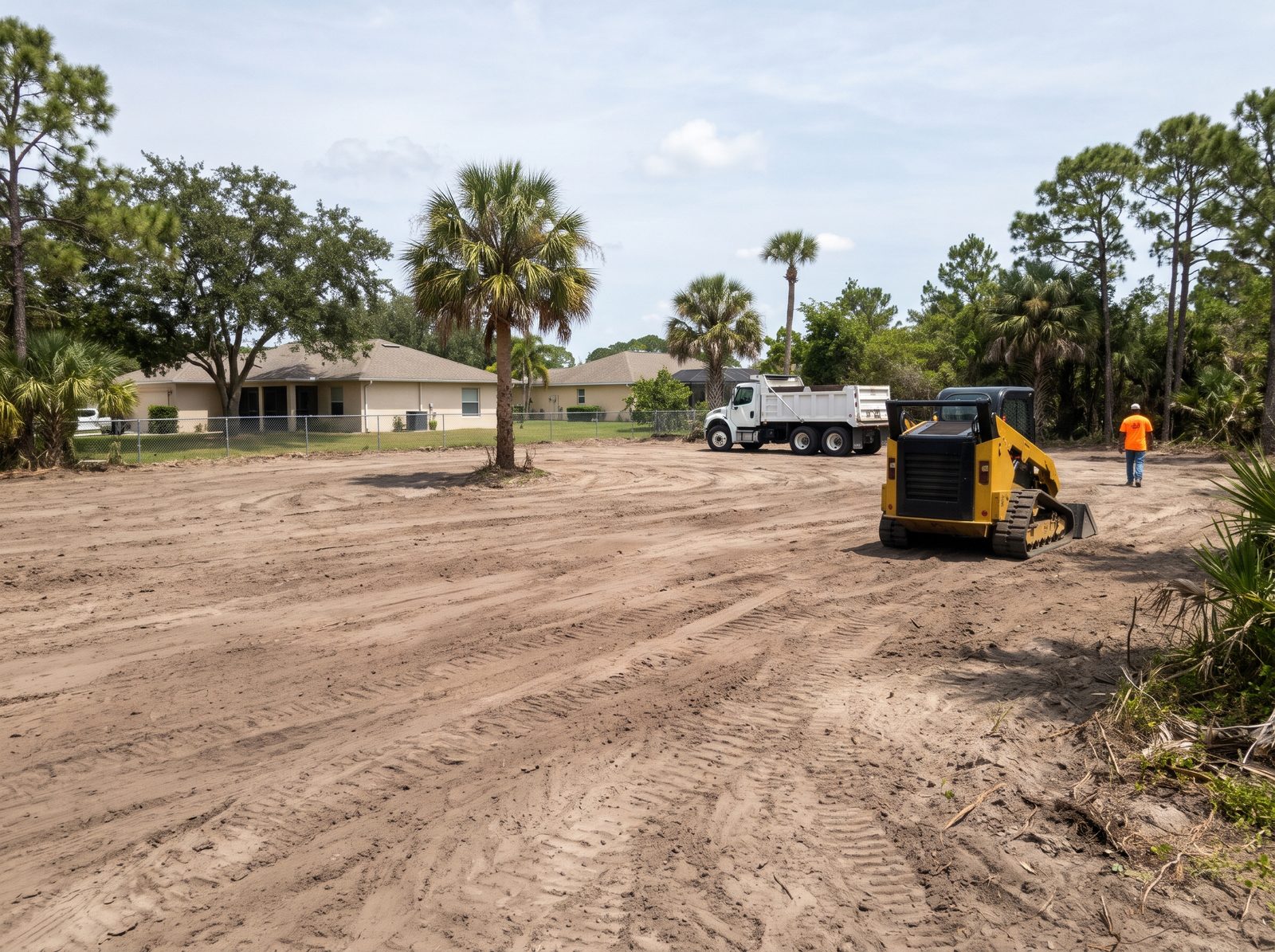
Buying a vacant lot is the easy part. Before a builder can form a foundation, the ground has to be checked, permitted, cleared, brought to the right elevation, compacted and shaped so water drains away from the future house. Doing those steps in the right order saves money, because each mistake tends to show up later as a delay, a failed inspection or a cracked slab. Here is the sequence that works on most residential lots around Fort Myers, Cape Coral, Lehigh Acres and the rest of Southwest Florida.
1. Start With the Paperwork
Get three things in hand before any equipment shows up:
- A boundary survey so everyone knows where the lot lines and easements are.
- A site plan (from the builder or engineer) that shows the house, driveway, septic (if any) and finished elevations.
- Your flood zone. Much of the region sits in FEMA flood zones, and the required floor elevation drives how much fill or how tall a foundation the house needs. You can look up your lot on the FEMA Flood Map Service Center, and your building department will confirm the elevation it requires.
2. Check the Clearing and Fill Rules for Your Jurisdiction
Rules change at the city and county line, so confirm them before you clear a single tree:
- Unincorporated Lee County: the county's Residential Building Guide says a vegetation removal permit is required on properties over 5 acres, over 2 acres on Pine Island, or any property on a barrier island. Smaller single-family lots are generally outside that requirement, but protected species rules still apply.
- Cape Coral: the city requires a permit before fill is placed on a site, and in Special Flood Hazard Areas it limits base fill under a single-family or duplex foundation to 12 inches and fill on the rest of the lot to 30 inches or a 4:1 slope, unless the Building Official approves more. Homes that need more height go on stem-wall or deepened-monoslab foundations.
- Collier, Charlotte, Hendry and the other cities each have their own clearing and fill requirements. Call the local permitting office with your parcel number.
3. Look for Gopher Tortoises
Gopher tortoises are protected in Florida, and they like the same dry, sandy ground people build on. Florida Fish and Wildlife Conservation Commission rules treat any work within 25 feet of a potentially occupied burrow as a disturbance that needs a relocation permit first. If you see burrows, or the lot has not been surveyed, get a survey done before clearing. Clearing first and asking later can mean enforcement and extra permits.
4. Call 811 Before Anyone Digs
Florida law requires notice to Sunshine 811 at least two full business days before excavation or demolition, so utilities can mark buried lines. That applies to stump removal, trenching and grading cuts too. It is free, and it prevents the most expensive mistake on a job site.
5. Clear the Lot
Trees, palmetto, brush, stumps and buried junk come out of the house footprint, driveway, septic area and anywhere else the plan calls for. A lot that will be built on soon usually needs complete land and lot clearing with stumps and roots pulled, because organic material left in the ground rots and leaves soft spots. On larger parcels, areas outside the build zone can often be handled with forestry mulching instead, which costs less and leaves a protective mulch layer.
6. Bring In Fill and Place It in Lifts
Where the lot needs height, clean compactable fill is delivered and spread in layers, called lifts, rather than dumped all at once. Each lift is compacted before the next goes on. Dumping several feet of loose fill and rolling only the top is how pads settle later. How many loads a lot needs depends on how low it sits, the elevation on the plans and, in Cape Coral, the fill limits.
7. Build the Pad and Rough Grade
The finished building pad is a level, compacted platform at the planned elevation, sized a bit larger than the slab. Many builders and engineers ask for compaction testing before they form the foundation, so ask your builder what density and test method they expect. Then the remaining ground is rough graded to carry rain away from the house. The Florida Building Code's residential drainage rule calls for the grade to fall at least 6 inches within the first 10 feet from foundation walls, or for swales or drains where the lot can't allow that.
8. Handle Drainage and Access
Before the builder takes over, make sure swales, culverts and low spots are shaped so stormwater has somewhere to go, and that the lot does not push water onto the neighbor. This is also the time to put in a shell-rock or crushed-concrete construction entrance, or the base for a gravel driveway, so concrete trucks are not sinking into sand in August.
How Long Lot Prep Takes
The field work on a typical single-family lot often takes several days to two or three weeks once permits are in hand. The bigger variables are how long permits take, tortoise surveys, how much clearing and fill the lot needs, and weather. Southwest Florida's wet season runs roughly mid-May through mid-October, and soaked ground slows fill placement and compaction, so plan ahead if you want to be build-ready by a certain date.
Keeping It Simple
Much of the delay on lot prep comes from handoffs between a clearing crew, a hauler and a grading contractor. Clearing, fill, grading, the pad and drainage can all be one job with us, on one schedule. For the bigger picture, see our grading and site prep service.
Frequently Asked Questions
Do I need a permit to clear my lot in Lee County?
In unincorporated Lee County, the county's building guide says a vegetation removal permit is required for properties over 5 acres, over 2 acres on Pine Island, or on a barrier island. Cities such as Cape Coral, Fort Myers, Bonita Springs and Estero have their own rules, so check with the office that covers your parcel.
How much fill will my lot need?
It depends on the existing grade, the elevation shown on your plans, the foundation type and any local fill limits. We measure from the plans and the site before quoting a number of loads.
Is a mulched-only lot ready for a house?
Usually not without more work. Mulching leaves stumps and roots in the ground, and the house footprint needs them removed before fill and compaction.
When is the easiest time of year to prep a lot?
The dry months, roughly late fall through spring, are usually easiest because the ground is firmer. Work can be done in summer, but afternoon storms cause more weather delays.
Want your lot ready for the builder? Call or text 914-562-4457 with your address or parcel number, or request a quote. Every job is quoted after we see the site.