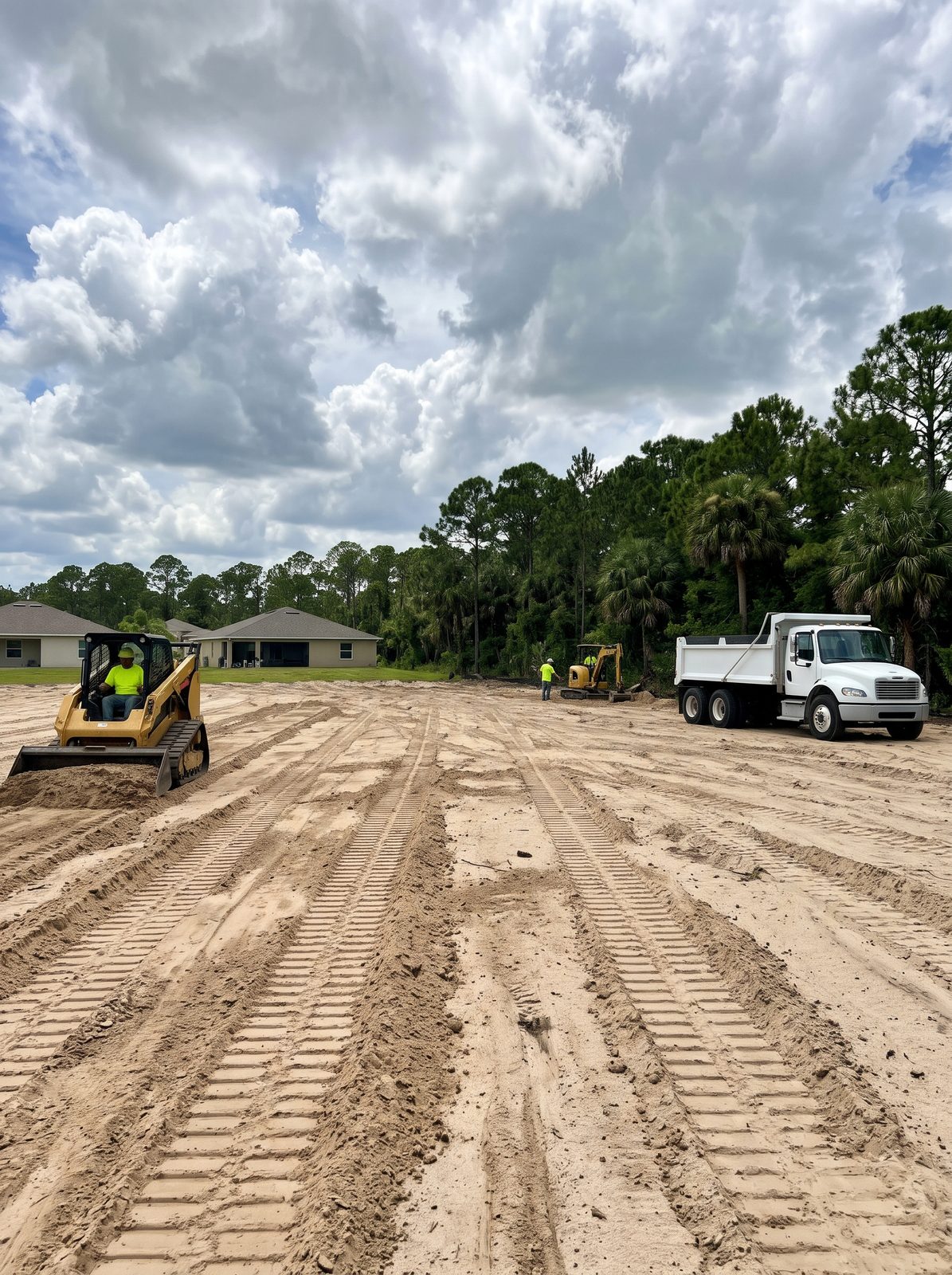
If you have a closing date, a builder waiting to pour, or a construction loan with draw deadlines, the question is not just what clearing costs but when the lot will be ready. The equipment work itself tends to move quickly. The days and weeks usually disappear before the first machine arrives, in permits, wildlife checks and scheduling. This guide breaks the timeline into pieces so you can plan each one.
Rough Time on Site, by Property Type
These ranges describe equipment time once a job is approved and scheduled. They are planning numbers, not promises, because two lots of the same size can look completely different under the brush.
- Typical platted homesite (a quarter acre or so) with grass and light brush: often a single working day, sometimes less.
- Homesite with thick undergrowth, vines and several trees: commonly one to three days, including stump work and loading debris.
- One to five acres: anywhere from several days to two or three weeks, depending on tree cover and how much material has to leave the property.
- Larger tracts or commercial sites: usually phased, with clearing, hauling and grading overlapping over several weeks.
Stump work, hauling and grading are separate steps. On some lots they take longer than the cutting does.
The Six Things That Set the Pace
1. What is growing on the lot
Open grass and scattered shrubs move fast. Dense Brazilian pepper, saw palmetto, grapevine and mature slash pine or oak slow everything down, because each one adds cutting time, stump work and truckloads. A lot that sat vacant for a decade in Lehigh Acres or North Fort Myers can be far heavier than it looks from the road.
2. Whether you need bare dirt or just a cleaner lot
Clearing for a house means removing stumps and roots from the footprint and driveway so the ground can be filled and compacted. That takes longer than forestry mulching, which shreds standing brush and small trees where they grow and leaves the chips on the ground. If you only need access, a survey line or a tidier property, mulching is often the quicker route. Our comparison of mulching versus full clearing explains the trade-off.
3. How much material has to leave
Clearing produces a surprising volume of logs, root balls and brush. The number of truckloads, the distance to a disposal or recycling site and that site's hours all affect the schedule. Pairing clearing with hauling from the same company removes the wait for a second contractor.
4. Rain and ground conditions
Southwest Florida's summer rainy season can leave low lots soft for days after a storm. Heavy equipment on saturated ground ruts the site and can make later grading harder, so work sometimes pauses until the soil firms up. The drier months of late fall through spring are generally the easiest window, and they book up for that reason.
5. Access
A lot on a paved street with room to stage a truck clears faster than a waterfront parcel, a lot squeezed between finished homes, or rural acreage with no driveway. Tight sites need smaller machines and more careful work around fences, utilities and neighbors' landscaping.
6. Trees you want to keep
Saving a group of oaks or a row of palms is worth it, but it takes time to work around them and protect their root zones. Mark them clearly before the crew arrives.
Where Most of the Wait Actually Happens
On many residential projects, approvals take longer than the clearing. A few examples of what can sit on the critical path:
- Local clearing rules. Requirements depend on whether the lot is in unincorporated Lee County, a city such as Cape Coral or Bonita Springs, or another county entirely. Some sites need a separate clearing permit and others are handled with the building permit. Our guide to clearing permits around Fort Myers breaks down the differences.
- Gopher tortoises. According to the Florida Fish and Wildlife Conservation Commission (FWC), work that stays at least 25 feet from every burrow does not need a tortoise permit. Work closer than that requires a relocation permit, and only authorized gopher tortoise agents can move the animals. Scheduling that agent and the permit adds lead time.
- Burrowing owls. Cape Coral and other parts of the region have active owl burrows on vacant lots. The City of Cape Coral uses a 33-foot buffer around burrows during nesting season (February 15 to July 10). If the buffer cannot be kept, an FWC permit is needed, and the city advises applying weeks in advance.
The practical takeaway: order a site check for burrows early, before you lock in a closing or construction start date.
What Comes Next, and How Long It Adds
For a home site, clearing is only step one. After it come fill delivery, building pad prep, compaction and grading and site prep so water drains away from the structure. Each stage depends on weather, fill volume and any compaction testing your builder requires. When one crew handles clearing and site work back to back, there is no gap waiting for a second company to mobilize. For the full order of operations, see getting a lot ready to build.
A Simple Planning Checklist
- Get your survey and, if you have one, the builder's site plan.
- Confirm with your county or city which clearing approvals apply to your lot.
- Have the lot checked for gopher tortoise and burrowing owl burrows, and for any sign of wetlands.
- Flag the trees you want to keep and the property corners.
- Request an on-site quote so the scope, number of loads and access are clear.
- Book clearing and grading together, ideally in the drier months if your schedule allows.
If budget is your next question, read what clearing costs around Fort Myers or look over our land and lot clearing service.
Frequently Asked Questions
Can a residential lot really be cleared in one day?
Often, yes, if the lot is a standard homesite with light to moderate growth, good street access and no protected burrows. Heavy tree cover, stump removal and many truckloads of debris push it to two or three days.
Is forestry mulching faster than traditional clearing?
Usually. Mulching chews through undergrowth and saplings without a separate hauling step and leaves the material on site, so there is little or nothing to haul. It does not remove roots, so it is not the right choice under a slab or driveway.
Will rain delay my clearing job?
It can. After heavy rain, low lots may need time to dry so equipment does not rut the ground. Delays are more common during the summer rainy season.
What usually causes the longest delay?
Approvals. Permit processing, wildlife surveys and, when needed, gopher tortoise or burrowing owl permits through FWC can take longer than the clearing itself. Start them as early as possible.
Planning a lot in Fort Myers or anywhere within about 60 miles? Call or text 914-562-4457 or request a quote. Every job is quoted after we see the site, so you get a timeline based on your actual lot.