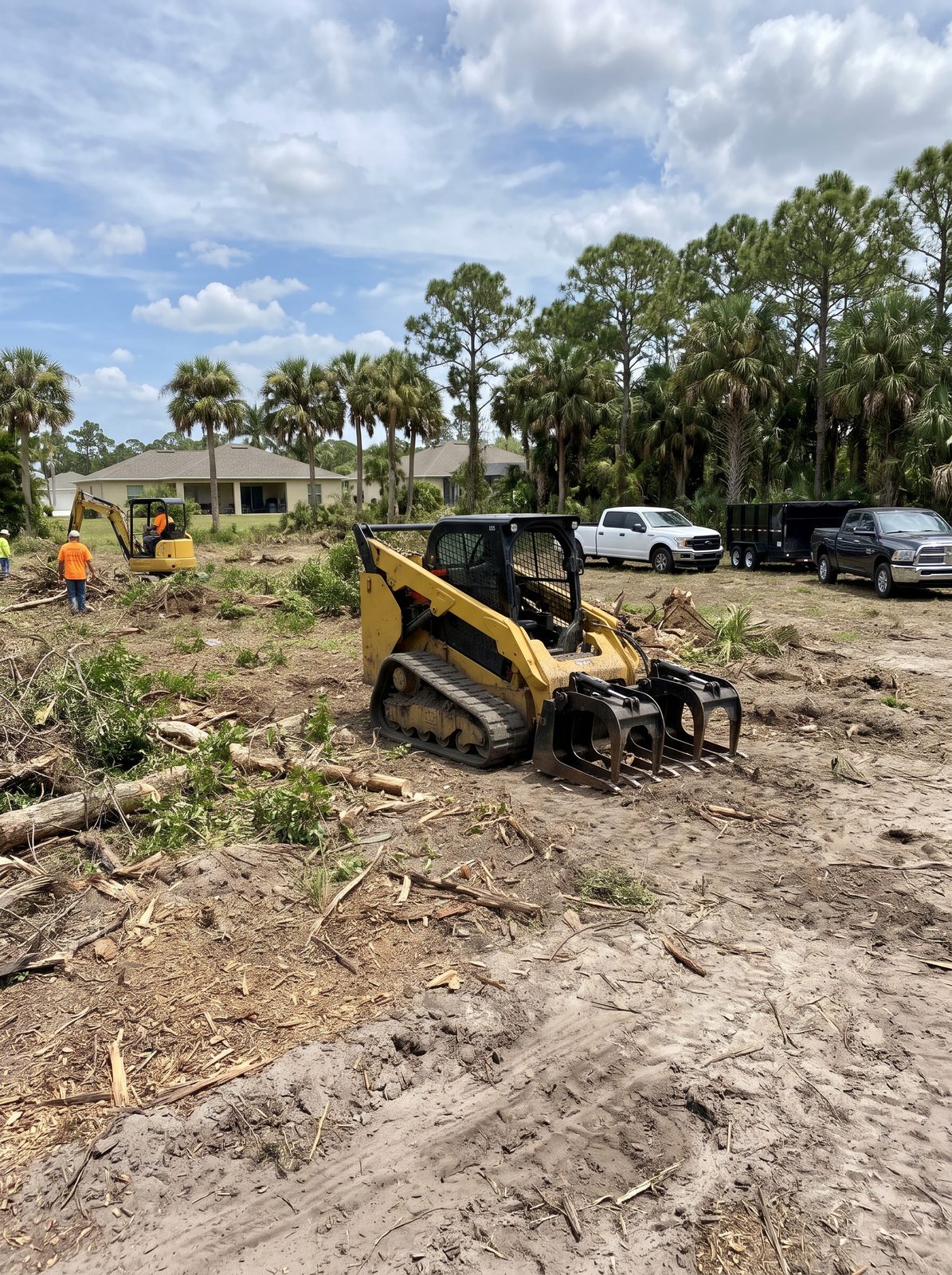
After a hurricane or a strong tropical storm, the debris shows up in two places: on the curb, waiting for county trucks, and everywhere else. Downed trees across a back lot, a pile of soaked drywall in a gated community, a commercial parking area buried in limbs, a construction site that has to be cleared before work can restart. Knowing what the county will handle, and what it won't, helps you plan the cleanup instead of waiting weeks for a truck that was never coming. Atlantic hurricane season runs June 1 through November 30, so the smart time to think about this is before a storm is named.
Before the Storm: Reduce What Can Come Down
- Have dead, leaning or overhanging trees looked at, especially near the house, driveway and power lines.
- Thin out thick brush and dead growth before a storm can throw it around.
- Keep swales, ditches and culverts open so stormwater has somewhere to go.
- Keep a clear path for equipment into the property, especially on acreage.
- On larger parcels, forestry mulching can thin undergrowth without stripping the land.
- Take dated photos of the property and trees now. They help with insurance claims later.
Right After the Storm: Safety First
Treat every downed line as live and stay away from it. Trees that are hung up, split or leaning on structures are dangerous to cut, so leave them for equipped crews. Photograph damage before anything is moved. Then sort out which debris is the county's job and which is yours.
How County Curbside Pickup Works
After a declared storm, counties send contracted debris crews to pick up storm debris that residents place at the curb. During the 2024 Helene and Milton cleanup, Lee County asked residents in unincorporated areas to sort debris into separate piles:
- Vegetation: branches, palm fronds, logs and plants. Not in plastic bags.
- Construction and demolition debris: drywall, carpet, furniture and other storm-damaged building materials.
- Appliances: emptied of food, with doors secured or removed.
Each type gets picked up on a separate pass. The county also asked residents to keep piles out from under trees and power lines and away from fire hydrants and mailboxes, and not to bag debris. Rules can change from storm to storm and from city to city, so follow your local government's instructions for each event.
What County Crews Usually Won't Take
County debris programs are built around storm debris placed on the public right-of-way. Collier County's storm debris guidance says plainly that, under FEMA guidelines, county contractors are not permitted to enter private property, and it lists reconstruction and renovation debris, lot-clearing debris and routine yard waste as ineligible. After Milton, Lee County said concrete was not eligible for pickup, treated condos, apartment complexes and trailer parks as commercial property that received a single collection pass, and warned that debris piled in common areas of private communities might not be collected.
That is where private haul-off comes in:
- Trees and limbs down in back yards, on acreage or across private drives
- Debris at commercial properties, HOAs and condo communities
- Construction and job sites that need to be cleared before work resumes
- Concrete, fencing and storm-damaged structures
- Vacant lots buried in fallen vegetation
- Owners who don't want to wait weeks for curbside passes
Tree Removal and Permits After a Storm
Some local tree rules make exceptions for dead or storm-damaged trees, but they are not identical everywhere. Florida law also says a local government may not require a permit or fee to remove a tree on residential property when the owner has documentation from a certified arborist or a landscape architect, based on an on-site assessment, that the tree poses an unacceptable risk to people or property. If you are not sure, call your city or county before removing healthy trees, and keep photos of the damage. If the storm debris sits on a lot you are about to build on, our guide to land clearing permits covers the usual checks.
Don't Burn It
Burning piles of storm debris is tempting, but Florida only allows burning of naturally occurring vegetation, land-clearing burns need Florida Forest Service authorization, and local burn bans are common after storms. Hauling or grinding the material is the safer route.
What Affects the Cost of Private Debris Haul-Off
- Volume: how many truckloads the job fills.
- Type of debris: vegetation, building debris and concrete go to different places and are charged differently at disposal sites.
- Tree work: cutting up large trunks, uprooted root balls and hung-up trees takes more time and equipment.
- Access: soft ground, fences, gates and blocked roads slow the work.
- Demand: right after a major storm, equipment, trucks and disposal sites are busy across the region.
Every job is quoted after we see the site. For cleanup on a lot that is headed for construction, see land clearing cost.
Choosing a Cleanup Contractor
Storms bring out-of-area crews and door-knockers. Get the scope and price in writing, ask where the debris will be taken, avoid paying the full amount up front, and be wary of anyone pushing you to sign right away. A local company with an address and phone number you can reach after the job is done is easier to deal with if something comes up.
We handle storm debris haul-off, land and lot clearing and demolition of damaged structures from our Fort Myers base, across Lee, Charlotte, Collier and Hendry counties. See our service areas.
Frequently Asked Questions
Will the county pick up storm debris from my back yard?
Generally no. County debris contractors collect sorted storm debris placed on the public right-of-way in front of homes. Debris elsewhere on private property has to be moved to the curb by the owner or removed by a private hauler.
How should I sort debris for county pickup?
Follow your local government's instructions for that storm. In Lee County's 2024 cleanup, residents were asked to make separate piles for vegetation, construction and demolition debris, and appliances, with no bagged vegetation.
Do I need a permit to remove a storm-damaged tree?
Rules vary by city and county, and some make exceptions for dead or damaged trees. Florida law also limits permit requirements on residential property when a certified arborist or landscape architect documents that the tree poses an unacceptable risk. Check locally if you are unsure.
Can I burn storm debris on my property?
It is generally not a good idea. Florida restricts what can be burned, land-clearing burns need Florida Forest Service authorization, and burn bans are common after storms. Hauling or mulching is safer.
Need storm debris hauled off a home, lot or job site? Call or text 914-562-4457 or send us the address and a few photos, and we will quote the cleanup.